
Mental health equity: Changes, challenges, and paving a path forward
“Health equity has always been an uphill battle. But without intentional investment and consistency, we risk sliding backward.” Marianne Huff
For Michigan’s behavioral health system, policy shifts at federal and state levels coupled with proposed funding cuts have heightened uncertainty for providers and consumers alike. While leaders across the state agree health equity has been elusive, they warn that current proposals, from Medicaid redeterminations to competitive bidding of public mental health management, could deepen inequities at a time when demand for services is growing.
Policy change and widening equity gaps
Even before the latest round of policy changes, access to mental health care in Michigan was far from equal. Workforce shortages, provider deserts, and long wait times had already deepened disparities across regions and racial and socioeconomic lines.
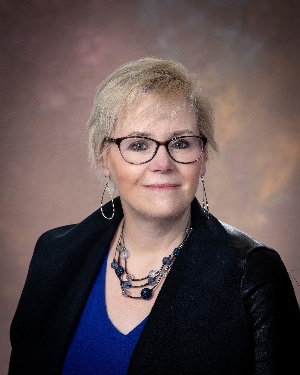
“We’ve struggled in the area of health equity long before these new changes,” says Marianne Huff, president and CEO, Mental Health Association in Michigan. “Now, we’re trying to understand how all this will affect people who are already the most vulnerable, people with mental health conditions, substance use disorders, and those living in poverty.”
Those fears are echoed across the public system. Alan Bolter, associate director, Community Mental Health Association of Michigan, says uncertainty has become the norm.
“It’s hard to say yet what will be impacted because some of the federal legislation won’t take effect for another couple of years,” he says. “But we know any reduction — even small — will hit hardest in rural and frontier areas that already operate with thin provider networks and limited resources.”
That uneven impact is intensified by an ongoing increase in demand.
“The number of people seeking services is greater than before COVID, and the level of intensity has gone up, too. Even in areas with more resources, we’re seeing systems stretched to the limit,” Bolter says.
The human cost of policy
On the ground, these state and federal policy shifts translate into daily uncertainty for both providers and the people they serve. In St. Clair County, Deb Johnson, executive director, St. Clair County Community Mental Health (CMH), says the growing anxiety among staff and families is tied to proposed changes in how the state manages behavioral health.
The Michigan Department of Health and Human Services announced in August that it will competitively bid out contracts for managing the public mental health system, opening the door for private health insurers to replace local public entities. Advocates estimate the change could strip as much as $500 million from Michigan’s $4 billion public behavioral health system.
“If private plans get their hands on management, there will be less money for direct services,” Johnson says. “That means fewer staff, fewer options, and longer waits for people who can’t afford to wait.”
Across Michigan, leaders are also watching how Medicaid redeterminations — the process of re-checking eligibility after pandemic-era coverage expansions — will affect access. Huff says the combination of redeterminations and high insurance deductibles leaves many residents without affordable options.
“Even people with insurance can’t afford to use it,” she says. “And for those on Medicaid, it’s getting harder to find a provider willing to accept the rates.”
Johnson worries about new federal rules requiring six-month redeterminations, saying the system can barely keep up with annual renewals.
“That’s ludicrous,” she says. “People will fall off coverage before they ever get the care they need.”
Workforce at its breaking point
If Michigan’s behavioral health system feels stretched, it’s because it is. Bolter describes workforce shortages as “the number one issue” threatening stability statewide. CMHA’s recent survey found 25–30% vacancy rates in some job categories and turnover rates approaching 50% for direct care workers.

“It’s not that people don’t want to help,” he says. “It’s that they’re underpaid, overburdened by paperwork, and leaving for jobs in the private sector that pay better and demand less.”
The shortage is especially dire in specialized areas like child psychiatry and culturally competent care. Huff says it’s not just about numbers, it’s about representation.
“We don’t have enough providers who come from different cultural and linguistic backgrounds,” she says. “Cultural competency isn’t a bonus. It’s essential to serving Michigan’s communities equitably.”
Meanwhile, community mental health agencies are trying to grow the workforce from within. St. Clair County CMH sponsors bachelor’s-level employees to earn master’s degrees in social work in exchange for a service commitment, one of the few sustainable solutions in a tight labor market.
“We’re investing in people who already know this community and want to stay,” Johnson says. “It’s working, but it takes time and money.”
The consequences of underfunding ripple far beyond clinic walls. When people can’t access mental health services, they don’t simply disappear, they show up somewhere else.
“They end up in emergency departments or county jails,” Bolter says. “And that’s far more expensive than providing care up front.”
Those ripple effects also strain local systems. Huff points to low hospital reimbursement rates that make inpatient psychiatric care financially unsustainable. Johnson worries about community-based programs — like crisis response teams and school partnerships — that could be the first casualties of funding cuts.
“These programs are the front line of prevention,” she says. “If they go, the whole system becomes more reactive and less humane.”
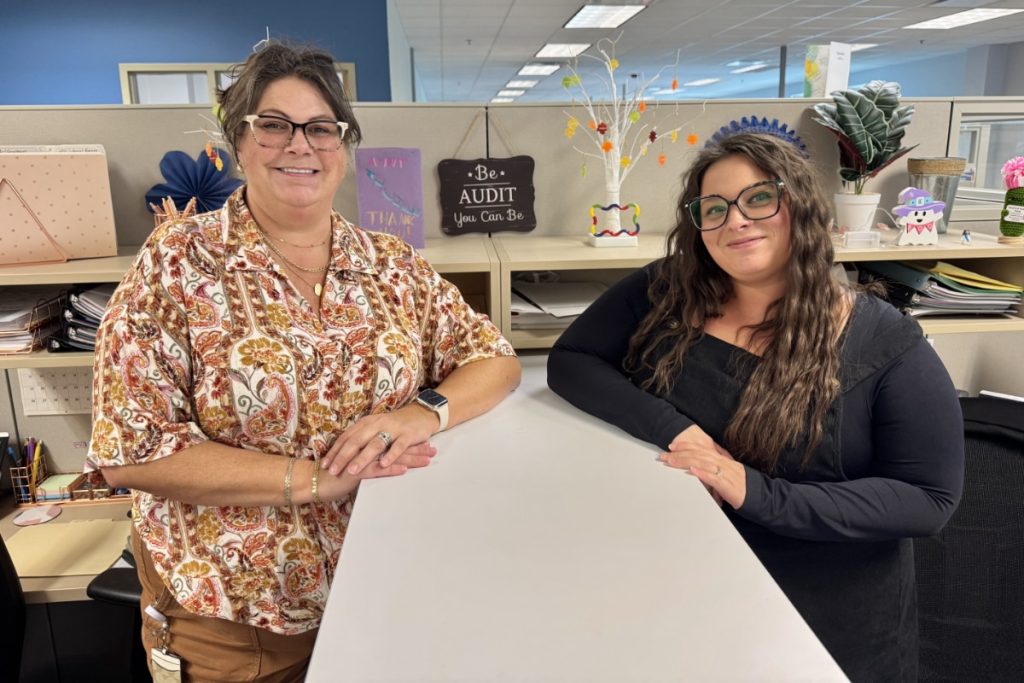
Despite the changes, local innovation shows what’s possible when systems are stable. In St. Clair County, partnerships remain a cornerstone of equity work. St. Clair County CMH coordinates with more than 80 organizations through a community services coalition, embeds a clinician in the Port Huron Police Department, and places a veterans’ navigator between CMH and Veteran’s Affairs to streamline access for veterans. Those efforts helped the agency serve more than 7,000 residents last year with a projected 7,500 this year in a county of just 160,000.
At the state level, Bolter and Huff agree that Michigan can build on such progress if lawmakers ease the administrative burden that pulls time and money away from care. Bolter points to provisions like “deemed status,” which prevents duplicate audits for nationally accredited agencies and policies maintaining telehealth parity for rural access.
“Every hour spent on redundant paperwork is an hour not spent helping someone,” he says.
Paving a path forward
When asked what Michigan needs most in 2025, the three leaders converge on a single theme: stability. Huff emphasizes restoring state general fund dollars that once covered care for uninsured residents. Johnson calls for halting competitive procurement until a clearer equity impact assessment can be done. And Bolter says the state must expand crisis and step-down services to fill critical gaps in care. Step-down care supports individuals after they complete residential treatment.
“We have to invest in the crisis continuum,” Bolter says. “People in acute distress need timely, community-based options, not ER boarding or jail cells. If we get that right, we’ll relieve pressure everywhere else in the system.”
As policy shifts and funding debates continue, the question is not whether the system can adapt, but whether it can do so without losing the people it was built to protect.
“Health equity has always been an uphill battle,” Huff says. “But without intentional investment and consistency, we risk sliding backward, and those who’ll feel it most are the people who already carry the heaviest load.”
Photos by Leslie Cieplechowicz.
The MI Mental Health series highlights the opportunities that Michigan’s children, teens and adults of all ages have to find the mental health help they need, when and where they need it. It is made possible with funding from the Community Mental Health Association of Michigan, Center for Health and Research Transformation, Genesee Health System, Mental Health Foundation of West Michigan, North Country CMH, Northern Lakes CMH Authority, OnPoint, Sanilac County CMH, St. Clair County CMH, Summit Pointe, and Washtenaw County CMH.
Related Articles

Community coalition to continue its work, even after the federal shutdown ends
Even after the federal government shutdown ends, it’s unclear when food benefits will reach families. A local coalition plans to continue its work to ease food insecurity.
Bay County coalition is bridging the gap for families during the SNAP and WIC pause
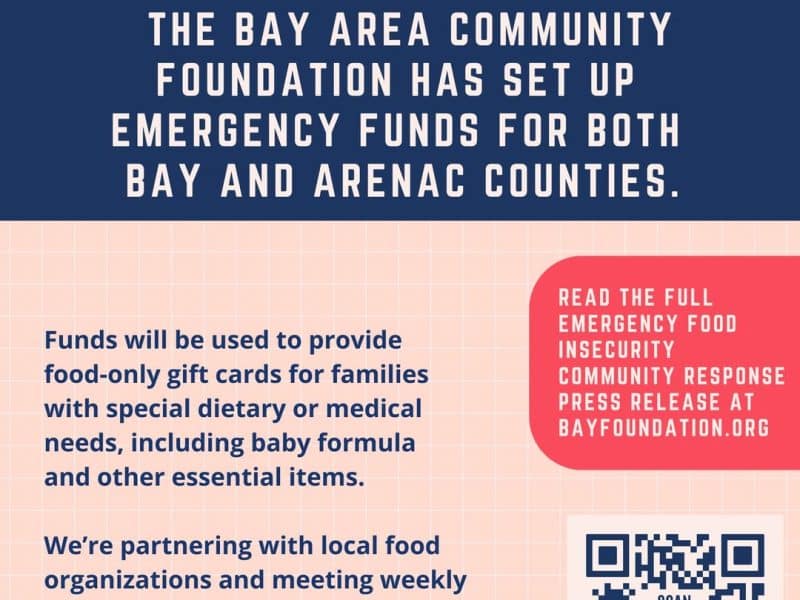
In Bay County, a coalition formed to help families fill their dinner plates. The coalition is tackling the problem in several different ways.The Bay Area Community Foundation established a Food Insecurity Emergency Fund for both Bay and Arenac counties. At the same time, the United Way of Bay County is collecting food to divide between food banks and recruiting volunteers to meet increased demand.