
Return of the Sturgeon: Adopt a fish, view the documentary film, and be part of a 20-year comeback story
For a donation less than the price of a fast-food meal, you can adopt a Great Lakes Sturgeon, an ancient, threatened fish species that’s the focus of a major 20-year environmental restoration project in the Saginaw River system.
You could adopt a movie star and benefit the environment, all for less than the price of one meal at a fast-food restaurant.
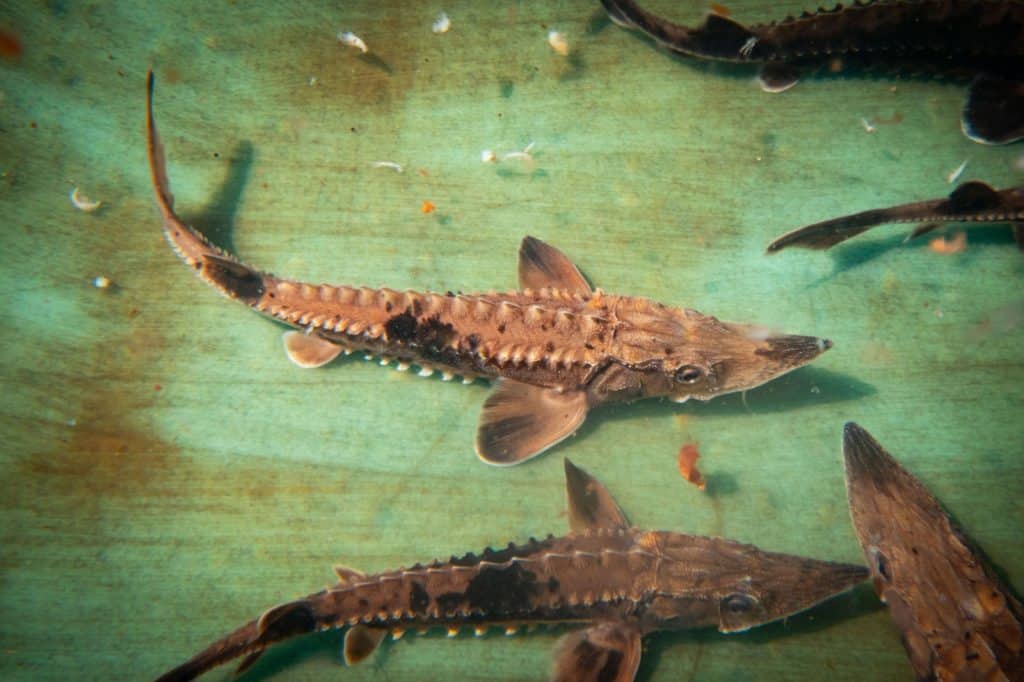
The movie star is the Great Lakes Sturgeon. Filmmakers are working on a documentary about a 20-year project to restore the Great Lakes Sturgeon to self-sustaining levels. When the film is done, you can catch it at the Delta College Planetarium.
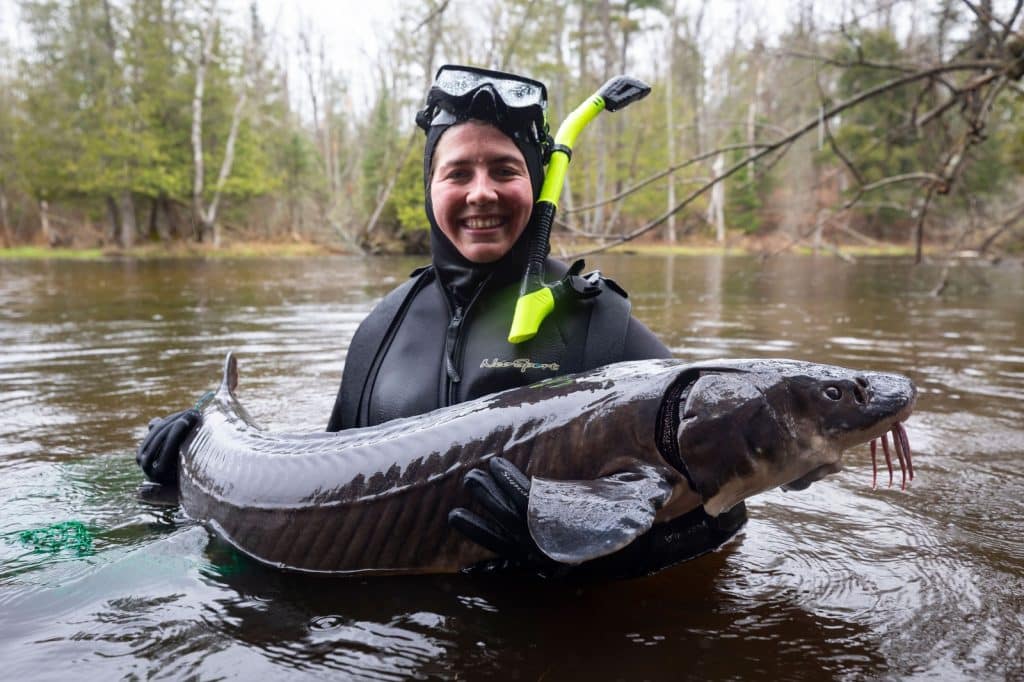
The film is just one step in the process toward raising awareness about the plight of the Great Lakes Sturgeon, a dinosaur-like fish that live 100 years (or more) and traces its ancestry back 130 million years.
A few years ago, though, the sturgeon was nearly non-existent in the Saginaw River system.
Since 2018, environmentalists have been working to restore the sturgeon in the watershed. It’s an expensive process, so they offer “Adopt A Sturgeon” for $10 a year
How did Great Lakes Sturgeon population decline?
The restoration work is necessary because the sturgeon, which at one time had been a food source for Native American populations, was nearly decimated, says Mike Kelly, Manager of the Saginaw Bay Watershed Initiative.
“The DNR really views the population of the Saginaw system as being extirpated, which essentially is a localized or regionalized extinction,” says Kelly, adding there is still a small population in the watershed. “But they’re all old fish. These are fish that are 70, 80, 90 years old, and there aren’t enough out there to find each other and spawn.”
The decline of the fish over the last two centuries was brought on by several factors, but Kelly says it was largely after the European settlement and development of North America.
“At first they were looked upon as a nuisance species, and then kind of the caviar market in Europe became big. Then these became a prized fish for their caviar, and they were caught and hunted with impunity and are now gone.”
Meaghan Gass, Extension Educator for the Saginaw Bay District of Michigan Sea Grant, says the fish were considered a nuisance to fishermen because they could damage nets.
“The fish has these bony scutes that are, when they’re younger, they’re really sharp,” she says. “As they get older, the lake sturgeon is a bottom feeder, and it rubs its body along the shores and rocks, so over time those scutes can get dull.”
Other factors in their decline is the destruction of habitat as lumberjacks used rivers to transport logs; engineers built dams on spawning rivers; and manufacturing facilities spewed industrial waste into the water.
All those factors made life hard for the sturgeon.
“They need fast-flowing currents to spawn and thrive for their reproduction,” Gass explains. “They spawn in streams typically, so they need those fast-flowing currents, and for a lot of our rivers in the Saginaw River system, they were dammed.”

What are we doing to bring sturgeon back?
Beginning in the 1990s, the Saginaw Bay Sturgeon Restoration project is making progress toward its goal of restoring the fish to “fishable” levels by 2038.
It began with the removal of a dam in the Cass River in Frankenmuth and the addition of rock ramps to allow sturgeon to pass over dams on the Cass and Shiawassee rivers
“Water quality had a big impact on sturgeon, too,” Gass says. “The Saginaw Bay River System, and some of the upstream sites, had a lot of human legacies and a lot of pollution that have impacted the health of the waterways. We’re doing a lot to make them a better place, and the fact that we’re restoring the sturgeon is such a great sign for the Saginaw Bay watershed, and the Saginaw River system as a whole.”
Dr. Jeff Jolley, Supervisor with the Fisheries Division of the Southern Lake Huron Management Unit of the Department of Natural Resources, says the work goes beyond restoring habitat. Scientists also need to re-populate the fish.
Jolley explains the re-population process requires months of planning, substantial funding, and an army of volunteers.
The sturgeon is a unique fish in that the female doesn’t start laying eggs until she is 20 years old, and the males don’t fertilize them until they are 15 years old.
“With an animal that grows very, very slow, and is very, very old, it’s not like a perch or a sunfish who probably reproduce at age 1, sometimes at age 0, and they live to be 3 years old,” says Jolley. “Sturgeon, I sometimes equate to like elephants or something like that. You can’t grow an elephant in a year, right?”
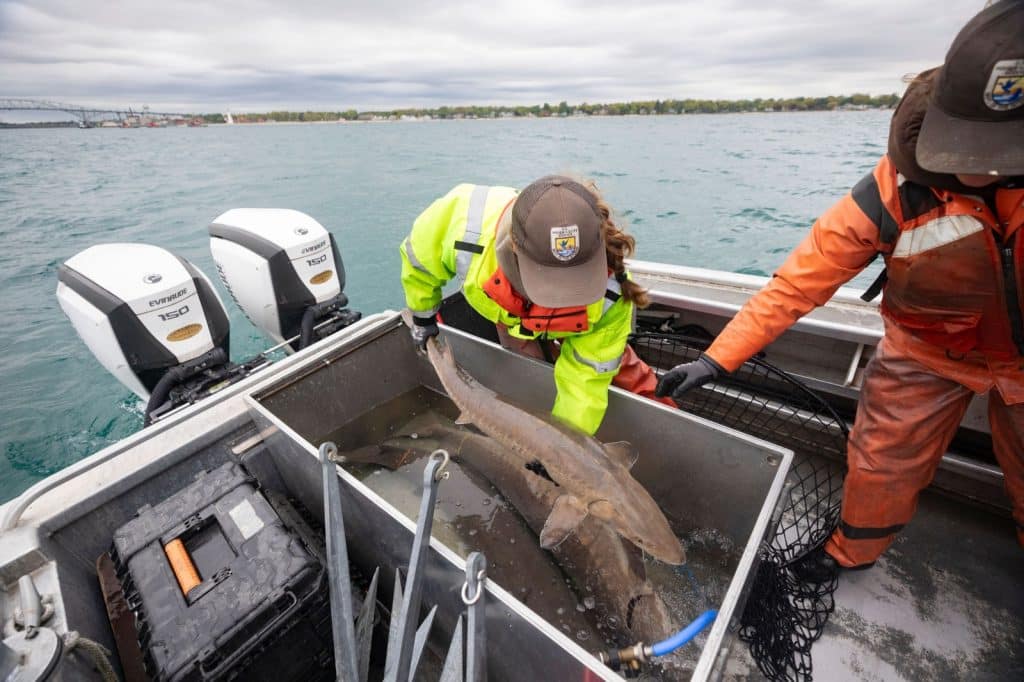
To help grow the population a little quicker, crews from the Fish and Wildlife Service fish for adult sturgeon in rivers around the state. After the adults spawn, their eggs are sent to a hatchery in Wisconsin. Later, the adults are returned to the rivers.
“You know they’re alive and they’re fertilized and they’re a sensitive commodity,” Jolley says. “They’re brought to Wisconsin into a hatchery for four or five months, where a hatchery staff works, then they’re put on a truck and brought back here and divvied up between the release locations.”
After approximately six months at the hatchery, about 1,000 sturgeon return to the area and are released into the Shiawassee, Tittabawassee, Flint, and Cass rivers in August and September.
Jolley says the whole process is a lengthy and expensive proposition. Along with the manpower and time, “the hatcheries are the most expensive thing that we have, because you’re moving water, you’re heating water, you’re cooling water, it’s tremendous electricity costs, so you start to see the high dollar value.”
Before the fish are released, they are also tagged with PIT, or Passive Integrated Transponder tags, similar to the microchip in a pet. If the fish are caught later, they can be identified and followed.
Although it’s costly, the process also is rewarding.
“So many people are just excited that Lake Sturgeon are returning back to their home in the Saginaw River system,” says Gass.

What’s next?
This year marked a milestone for the restoration. Gass says they have released 8,000 fish since 2018. They’re also looking forward to the release of a documentary on the Sturgeon Restoration in the next few months.
Kelly says the documentary that details the restoration process and why it’s important to the Great Lakes Bay Region will be shown first at the Delta College Planetarium. “We really felt it was important to document it, so that people understand why we are restoring this threatened species,” he says.
Can I get involved?
Anyone can get involved in the Sturgeon Restoration Project, Kelly says. Through Adopt A Sturgeon, it costs as little as $10 a year. Donors receive a certificate and get updates on the life of the fish.
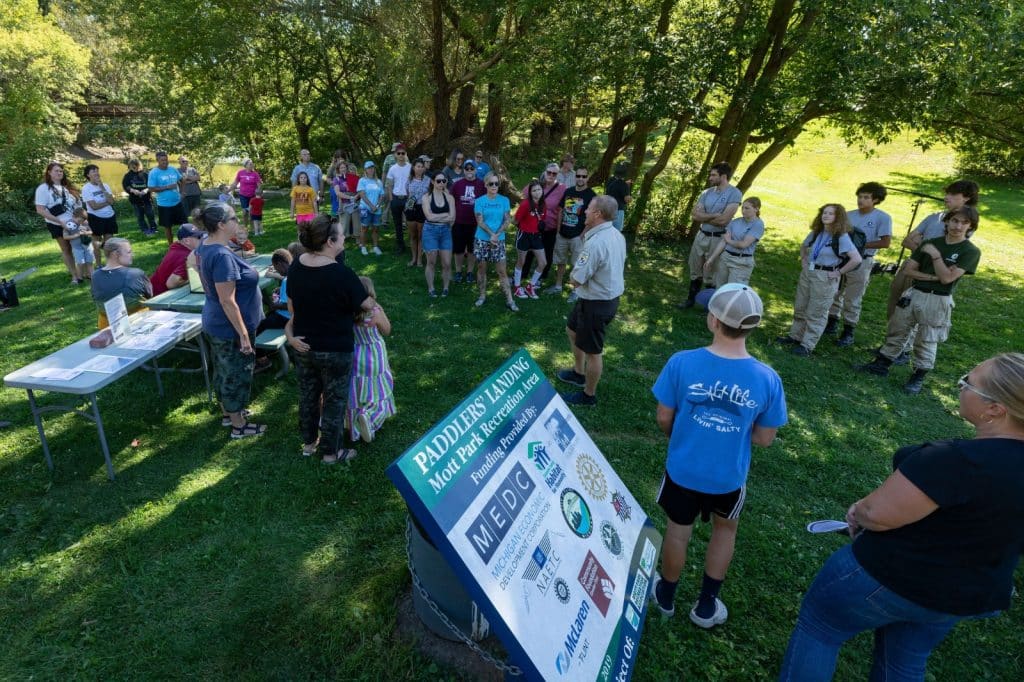
Gass says there are different levels of adoption. She also points out that you don’t have to adopt a fish in order to participate when the fingerlings are released into the rivers.
Look for updates on the sturgeon restoration, ways to help, and the upcoming documentary on social media or at https://www.saginawbaysturgeon.org/
Related Articles
New man-made reef in the Saginaw Bay helps restore fish, culture, and a decimated habitat
A reef constructed near the mouth of the Saginaw River in September and October may already be helping to correct decades of damage from humans, invasive species, the wind, and tides.

Meeting rural Michiganders’ mental health care needs
Michigan’s rural residents face different challenges when accessing mental health care than residents of urban areas. Transportation issues, loneliness, and limited group therapy options can compound their mental health needs. To address these challenges, community mental health (CMH) agencies like Sanilac County Community Mental Health innovate community-based solutions that meet their populations where they are at.
Mental health agencies strengthen services through community collaborations
Across Michigan, community mental health (CMH) agencies are expanding their reach through partnerships with local organizations that address housing, transportation, and other barriers to care. These collaborations aim to create a more coordinated and accessible mental health system, particularly for individuals with complex needs.